
Servers, laptops and networking equipment don’t stop being a liability the moment they’re switched off – unmanaged e-waste still carries data risk, compliance exposure and recoverable value that most businesses never account for. OTS provides structured e-waste management and recycling for organisations across India, helping them retire obsolete IT equipment through collection, assessment, secure data destruction, refurbishment, recycling and responsible disposal, handled as one accountable process rather than an afterthought.
OEM Partners
Cities Delivered
Clients Served
NOC Support
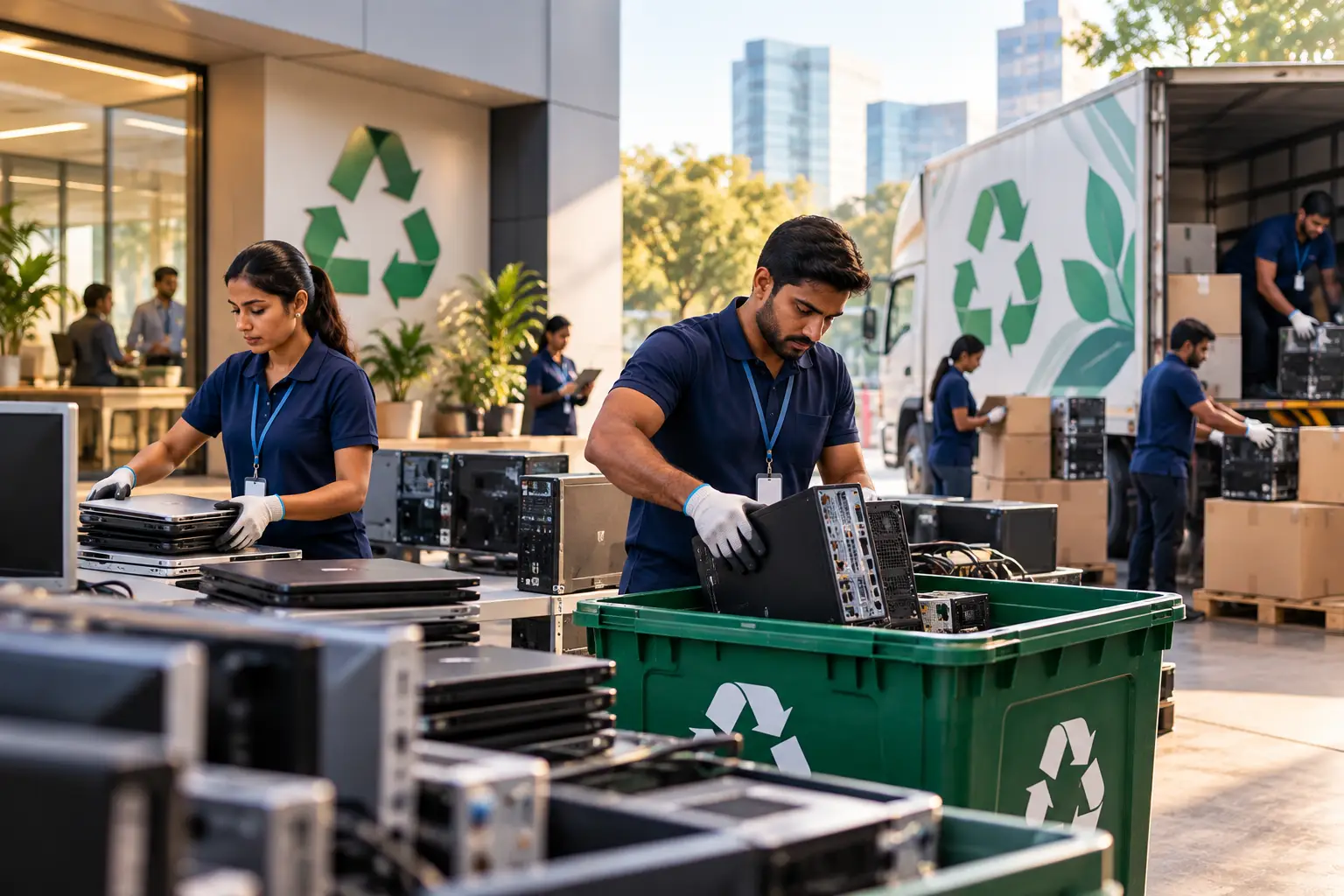
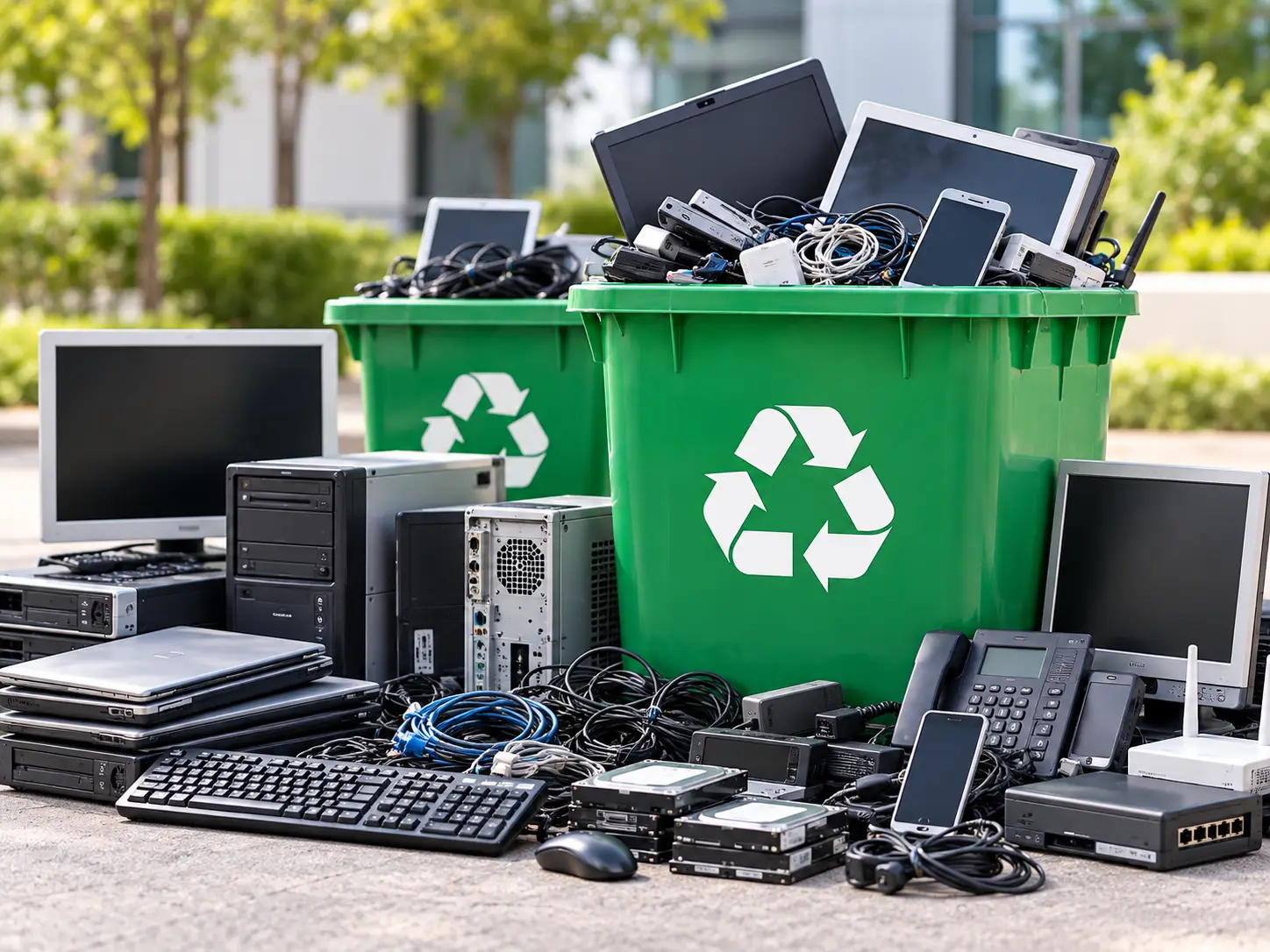
E-waste management is the structured process of handling electronic equipment that is obsolete, damaged, redundant or no longer required – computers, laptops, servers, storage devices, networking equipment, printers, monitors, peripherals and other electronic assets. It involves far more than simply disposing of old equipment: businesses need to consider the condition and value of each asset, the information stored on it, opportunities for reuse and refurbishment, and the appropriate recycling or disposal route.
OTS helps organisations bring these activities together as part of a structured approach to IT asset lifecycle management and electronic waste management.
Six capabilities covering the full asset retirement journey – from first pickup to final disposition.
Managing e-waste begins with secure and organised collection across offices, branches, warehouses, data centres and other operational locations. OTS supports corporate e-waste collection, bulk and multi-location pickup, asset transportation, collection coordination and inventory support - giving businesses visibility over equipment leaving their environment before it moves to assessment, refurbishment, recycling or disposal.
Not every retired asset needs to become waste. OTS assesses and categorises equipment by condition, functionality and potential next step, organising the asset flow into Reuse → Refurbishment → Remarketing → Recycling → Disposal - helping businesses extend the useful life of suitable technology before it reaches material recycling or end-of-life processing.
Retired equipment can still hold sensitive business information, user data, credentials and customer records long after it's taken out of service. OTS handles secure data sanitisation for hard drives, SSDs, servers, laptops, desktops, storage systems and other data-bearing devices - wiped securely or physically destroyed as required - before equipment is reused, refurbished, transferred, remarketed or removed from an organisation's control.
Equipment reaching the end of its original deployment may still have further use in it. Suitable devices can be repaired, upgraded, cleaned, reconfigured, tested, quality-checked and prepared for redeployment - particularly useful during technology refresh projects where functional hardware could support another deployment cycle. Refurbishment integrates into OTS's broader IT Asset Refurbishment and Asset Lifecycle Management capability.
Equipment that can't be economically refurbished or reused moves into recycling - processing computers, laptops, servers, networking equipment, printers, monitors, electronic components and IT peripherals so recoverable materials and components can be separated and handled through appropriate channels, rather than treated as general waste.
Some equipment reaches a condition where reuse, refurbishment or material recovery is no longer practical. OTS manages these assets through responsible end-of-life disposal, supported by appropriate documentation and asset records, so obsolete equipment is never simply left unmanaged after it's removed from service.
A structured process runs behind every engagement, taking equipment from collection through to final disposition.
Equipment collected from designated locations according to agreed service requirements.
Equipment identified and recorded, and data-bearing devices wiped or destroyed before further processing.
Equipment inspected to determine physical condition, functionality and potential for further use.
Suitable equipment repaired, upgraded, tested and prepared for redeployment or secondary use.
Assets no longer suitable for reuse directed towards appropriate recycling, or managed through responsible end-of-life disposal.
Asset records maintained to give businesses visibility into how retired equipment was processed.
The Full Range of Retired IT Equipment
Desktops, laptops, workstations and related computing equipment assessed for reuse, refurbishment, recovery or recycling.
Handled with particular care for data sanitisation, given the business-critical or sensitive information they can hold.
Routers, switches, firewalls and other hardware assessed during infrastructure upgrades or legacy replacement.
Printers, scanners, copiers and multifunction devices assessed for continued use or processed appropriately at end of life.
LCD, LED and other business displays collected as part of wider asset retirement or refresh programmes.
Keyboards, mice, cables, UPS systems, docking equipment and other peripherals included in the wider programme.
Company-issued phones and tablets assessed for secure data wiping, reuse or recycling as devices are refreshed.
Any other technology reaching end of life, assessed according to its condition and appropriate next step.
Data sanitisation built into the asset retirement process, reducing the risk of information remaining on old storage devices.
Structured recycling and responsible end-of-life processing handle electronic waste more effectively than ad-hoc disposal.
Equipment that looks obsolete may still have value through refurbishment, reuse or remarketing.
Extending equipment life through reuse and refurbishment, and recycling equipment at end of life, both support wider sustainability strategy.
Identification, assessment and reporting give businesses more accurate lifecycle records.
A professional service coordinates collection, assessment, data sanitisation, refurbishment, recycling and disposal, instead of consuming internal time and resources.
Different organisations have different technology environments and asset retirement requirements. OTS supports businesses across:
Substantial, multi-location IT estates needing structured collection, asset identification, data security, refurbishment and recycling across every site.
Servers, storage systems and infrastructure hardware where appropriate data sanitisation and asset processing are essential parts of decommissioning.
Laptops, desktops, monitors, printers, networking equipment and peripherals retired as the technology environment evolves.
Schools, colleges, universities and training organisations managing technology refreshes and end-of-life equipment at scale.
Defined requirements for asset management, data security and equipment retirement, supported with structured disposal and documentation.
Clinical and administrative equipment retired with data security front of mind, given the sensitivity of patient and operational records.
E-waste recycling isn’t an isolated activity that begins only when equipment stops working – it’s part of the wider IT Asset Lifecycle Management process:
Businesses procure and deploy technology, maintain and manage it through its operational life, and move it into refresh and recovery once it’s outdated or no longer fits business requirements. At that point, equipment can be refurbished, redeployed or remarketed, or moved into recycling or responsible disposal at end of life. Integrating e-waste management into this wider lifecycle gives businesses a more structured way to manage technology from acquisition through end of life.
OTS brings an IT infrastructure perspective to asset retirement, not a generic waste-collection service – end-to-end e-waste management with secure data destruction built into every stage, and documentation that gives you full visibility into where every asset ended up. Here’s what else sets the programme apart:
E-waste management is the structured process of collecting, assessing, securing, reusing, refurbishing, recycling and responsibly disposing of obsolete or unwanted electronic equipment.
E-waste recycling is the process of recovering usable materials and components from electronic equipment that has reached the end of its useful life.
Electronic waste can include computers, laptops, servers, networking equipment, monitors, printers, storage devices, peripherals and other electronic equipment, depending on the recycling process and applicable requirements.
Corporate e-waste collection generally involves identifying equipment scheduled for retirement, coordinating collection from designated locations, recording the assets, and transporting them for assessment and further processing.
Data can be removed through secure data wiping or, where required, physical destruction of storage media. The appropriate method depends on the device, data-security requirements and intended disposition of the asset.
Yes. Computers and laptops that remain technically suitable can potentially be repaired, upgraded, tested and prepared for reuse or redeployment.
Equipment that cannot be economically reused or refurbished is directed towards appropriate recycling or end-of-life disposal processes.
Professional services help businesses manage collection, asset identification, data security, recycling and documentation through a structured process, rather than handling retired equipment as general waste.
Yes. IT asset disposal is one stage of a broader e-waste and IT asset lifecycle management process, alongside collection, data destruction, refurbishment, reuse and recycling.
Recycling helps recover materials from end-of-life electronics and reduces the need to treat reusable or recoverable resources as unmanaged waste. Extending equipment life through refurbishment and reuse also complements an organisation’s wider sustainability efforts.
From secure collection and data destruction to refurbishment, recycling and responsible disposal, talk to OTS about an e-waste management programme built around how your organisation actually retires technology.

Services
Solutions
Industries